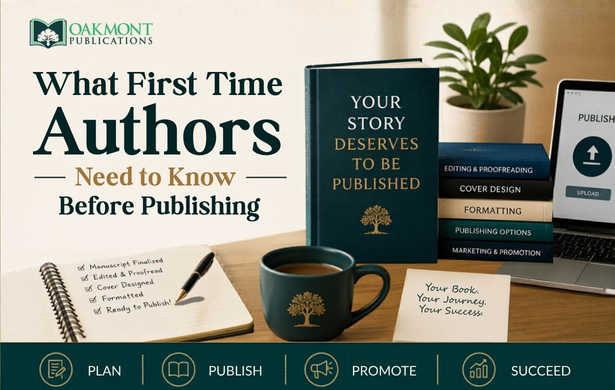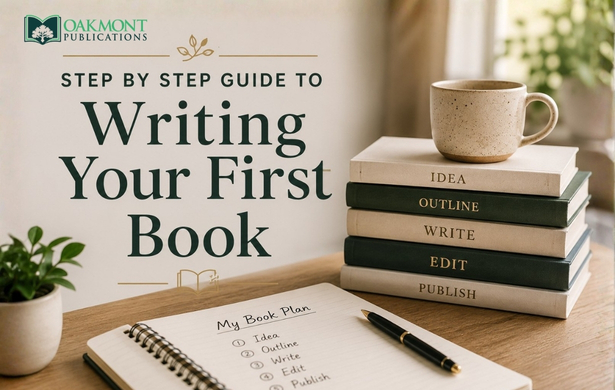
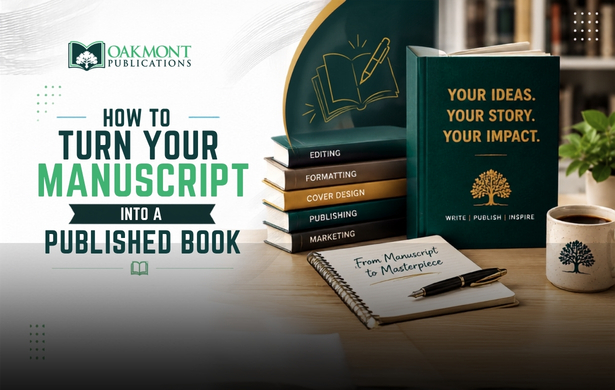
Writing and publishing a manuscript is an accomplishment that is not a goal for everyone. It takes hard work, creativity and determination.
Novice authors may consider the act of publishing to be complicated due to the large amount of technical training needed to properly edit, format and layout their books along with creating a cover for their books before printing, selling and marketing their books. This fact explains the importance of knowing the publishing process.
Regardless whether you will choose self-publishing or traditional publishing route, knowledge of the process helps avoid mistakes and save time, money, and efforts.
Authors working with OakMont Publications will get full publishing assistance covering editing, book cover design, book marketing strategies, book printing services, ebook publishing services, creating an author platform, and book distribution services.
The following article will explain how each publishing process step works.
Complete Your Manuscript Before Considering Publication
Most first-time authors begin their search for ways to publish a manuscript before it is fully completed. This almost always results in problems down the line.
Prior to production, ensure that your manuscript has been through:
- Self-editing
- Structural revisions
- Consistency checks
- Grammar review
- Beta reader feedback
- Chapter refinement
The better the foundation you have in your manuscript initially, the easier the publication process will be.
Writers seeking tips for how to publish a manuscript frequently jump straight to printing and distribution, but in reality, the art of publishing lies in the preparation phase. Publishers can improve an already good manuscript, but no amount of help can take the place of good writing basics.
After you feel like you’ve completed your manuscript, then comes the fun part.
Understand the Complete Publishing Journey
An understanding of the complete manuscript to book process Publishing Process can be helpful, as not all books are created overnight! The evolution of a manuscript into a finished book has many different stages and these stages all have an impact on how well the “final product” is written. When any stage is omitted, this may impair the overall quality of the finished product in terms of readability, professionalism or making it available for people to read.
Most books move through these major phases:
- Editing
- Proofreading
- Formatting
- Cover design
- ISBN registration
- Print preparation
- Ebook conversion
- Distribution
- Marketing
- Launch support
Publishing corporations make the procedures more efficient, allowing authors to concentrate on writing and growing their audiences, rather than dealing with technology issues.
At OakMont Publications Services, publishing assistance is designed to simplify this transition for both first-time and experienced authors.
Editing Is Crucial to Creating Quality Books
Investing in editing is a smart choice for an author.
This is why the majority of bestselling authors hire an editor, as it greatly improves:
- Clarity
- Pacing
- Grammar
- Flow
- Structure
- Readability
- Reader engagement
There are many levels of manuscript editing and publishing; however, they all serve different purposes.
Developmental Editing
The editor will work with the author to revise for: pacing/storytelling/organization/readability.
Line Editing
This process addresses sentence construction, tone, transitions, and flow.
Copy Editing
This process also includes checking for grammar errors: grammar/syntax/punctuation/consistency.
Proofreading
This is the final step taken before publishing. Proofreading eliminates any remaining errors in grammar and formatting.
The ability for readers to easily locate errors – whether they’re grammatical or otherwise – can often jeopardize reviews of otherwise great books.
Decide Between Traditional-Publishing and Self-Publishing
Authors must also decide between doing traditional publishing, or opting to go with self-publishing instead.
When authors go with traditional methods of publishing, they are often providing:
- Literary agents
- Query letters
- Publisher submissions
- Long response times
- Limited acceptance rates
For many writers, this route can take years with no guarantee of acceptance.
Independent publishing offers an alternative that provides:
- Faster timelines
- Creative control
- Ownership rights
- Higher royalty percentages
- Direct publishing flexibility
In seeking more information on how to publish a written book, authors often discover that self-publishing is among the fastest growing sectors in publishing at this time.
Today, self-published books can easily match their traditionally published counterparts when it comes to quality and marketability.
It is this trend that has driven many authors to look for information on a self publishing manuscript guide.
Reader Experience is Enhanced through Professional Formatting
It’s common for first-time authors to trivialize the importance of formatting.
Many have the impression that they can upload a Word Document into a publishing platform and produce a polished product. In reality, issues are created when formatting is not used properly, resulting in a book that appears unprofessional right from the start.
Professional book formatting and publishing includes:
- Proper margins
- Typography selection
- Chapter layouts
- Pagination
- Header styling
- Spacing consistency
- Ebook responsiveness
- Print-ready file preparation
Formatting impacts readability more than many authors realize. Readers expect clean, polished presentation across both print and digital platforms.
Poor formatting can lead to:
- Broken paragraph spacing
- Misaligned text
- Device compatibility issues
- Printing errors
- Unprofessional appearance
Professional formatting ensures your book functions properly whether readers access it on Kindle, paperback, tablet, or desktop devices.
Your Book Cover Is a Marketing Tool
Readers absolutely judge books by their covers.
Before someone reads your description or sample pages, they see your cover first. That visual impression influences whether they click, browse, or move on immediately.
Strong cover design should:
- Match genre expectations
- Look professional at thumbnail size
- Create emotional interest
- Use readable typography
- Appeal to the target audience
Today’s publishing market is highly competitive. Your cover competes against thousands of other titles online.
At OakMont Publications Portfolio, visual presentation reflects how important professional design has become for modern publishing success.
A compelling cover increases discoverability, credibility, and reader interest.
ISBN Registration and Publishing Setup
Every commercially distributed book requires publishing metadata and identification.
This includes:
- ISBN registration
- Barcode generation
- Copyright setup
- Author information
- Book categories
- Search keywords
- Sales descriptions
Metadata is extremely important because it affects how your book appears in online searches.
Strong metadata helps:
- Improve discoverability
- Increase search visibility
- Match reader interests
- Support platform rankings
Many authors exploring how to get a book published underestimate how important backend optimization is to long-term visibility.
Publishing is not only about creating a book. It is also about positioning it correctly in the marketplace.
Ebook Publishing Continues to Grow
Digital reading has transformed the publishing industry.
Millions of readers now consume books entirely through:
- Kindle devices
- Tablets
- Smartphones
- Ebook readers
That is why authors increasingly prioritize digital publishing alongside print production.
To properly convert manuscript into ebook format, publishers create specialized files optimized for digital devices.
This usually includes:
- EPUB formatting
- Kindle-ready files
- Responsive text layouts
- Interactive navigation
- Device compatibility optimization
Professional ebook publishing services improve:
- Download performance
- Reader experience
- Accessibility
- Global distribution opportunities
At OakMont Publications Ebook Publishing Services, digital publishing support helps authors prepare books for multiple ebook marketplaces efficiently.
Ignoring digital publishing today can significantly limit your audience reach.
Printing and Production Matter More Than Ever
Physical books remain extremely popular despite the rise of digital publishing.
Readers still value:
- Paperback editions
- Hardcover collections
- Signed copies
- Giftable formats
- Tangible reading experiences
The professional book production process involves preparing files for high-quality printing while maintaining consistency across trim size, margins, binding, and visual presentation.
Print production includes:
- Interior file preparation
- Cover wrap design
- Spine calculations
- Paper selection
- Color calibration
- Print proofing
Readers may forgive small writing flaws.
They rarely forgive poor production quality.
Distribution Determines Visibility
A published book only succeeds if readers can find it.
Distribution is the stage where your book becomes available across major retail platforms.
This can include:
- Amazon
- Barnes & Noble
- Apple Books
- Kobo
- Google Books
- Independent bookstores
- Online retailers
Professional publishing services help streamline:
- Platform uploads
- Distribution setup
- Retail compatibility
- Metadata optimization
- International availability
For authors focused on publishing a finished manuscript, proper distribution support saves time and avoids technical mistakes.
Wider distribution increases opportunities for:
- Sales
- Reviews
- Discoverability
- Audience growth
Publishing is no longer limited to local bookstores. Today’s authors can reach readers globally within days.
Marketing Is Essential for Book Success
One of the biggest myths in publishing is believing that books automatically sell once they go live online.
Visibility drives sales.
Book marketing includes:
- Social media promotion
- Press releases
- Email campaigns
- Author websites
- Amazon optimization
- Book trailers
- Influencer outreach
- Reader review campaigns
Publishing companies increasingly recognize that marketing is not separate from publishing.
It is part of it.
Authors who actively market their books consistently outperform those who rely solely on platform algorithms.
Author Branding Builds Long-Term Growth
Publishing one book can create opportunities far beyond book sales.
Many authors use publishing to:
- Build authority
- Launch speaking careers
- Expand consulting businesses
- Grow online audiences
- Develop personal brands
A strong author platform often includes:
- A professional website
- Consistent branding
- Media outreach
- Podcast appearances
- Social media engagement
- Email newsletters
Readers often follow authors, not just individual books.
That distinction matters for long-term career growth.
Common Publishing Mistakes First-Time Authors Make
There are numerous ways to avoid these common mistakes made by first-time writers.
The Following Are 3 Most Frequently Made Errors By New Authors:
Publish Quickly
Rushing Obviously Always Results In Errors (Type/Spell), So You Will Commonly Receive Negative Reviews.
Fail To Have Your Work Professionally Edited.
Readers immediately notice grammar and structure issues.
Using Amateur Covers
Low-quality covers reduce credibility instantly.
Ignoring Ebook Optimization
Improper digital formatting hurts readability.
Neglecting Marketing
Books need active promotion to gain visibility.
Choosing Weak Keywords
Poor metadata limits discoverability online.
Overlooking Formatting
Technical formatting problems frustrate readers.
Understanding these mistakes early can dramatically improve your publishing outcome.
Why Professional Publishing Support Makes a Difference
Some authors manage every stage independently.
Most eventually realize the process is far more technical and time-consuming than expected.
Professional publishing services simplify:
- Editing
- Formatting
- Cover design
- Distribution
- Ebook conversion
- Print production
- Marketing
- Branding
The goal is not simply to release a book.
The goal is to produce a polished, competitive publication that readers trust immediately.
That difference affects:
- Reviews
- Sales
- Discoverability
- Brand credibility
- Long-term opportunities
Publishing Is More Accessible Than Ever Before
The ability to publish has never been as easy as it is today.
Authors used to rely on literary agents and traditional publishing companies, but there have been many changes in the publishing industry recently.
Independent publishing options make it possible for authors to:
- Retain ownership rights
- Control pricing
- Set launch schedules
- Reach global audiences
- Build direct reader relationships
This change has allowed writers of all experience levels and genres to take advantage of numerous available opportunities.
Additionally, authors are now free to produce a piece of work without having to obtain consent from third parties.
Authors are provided with plans, ingoing preparation, and supportive contacts as a result of current practices.
FAQs
How much time will be needed for the publication of my book?
The duration will depend upon various factors such as editing, design, formatting, and other production aspects. The majority of professional publications may require weeks to months from the manuscript stage until its release.
Is there any need for professional editing prior to publication?
Certainly. This will be one of the key factors that should be considered by the author.
How important is book formatting?
Formatting directly impacts readability and professionalism. Poor formatting can create technical issues and reduce reader satisfaction.
What services do publishing companies provide?
Publishing companies may offer:
- Editing
- Formatting
- Cover design
- Ebook conversion
- Printing
- Marketing
- Distribution
- Branding support
How much does publishing a book cost?
Costs vary depending on the level of editing, design, production, and marketing support required. Professional publishing is an investment in quality and visibility.
Can self-published books succeed commercially?
Yes. Many independent authors achieve significant sales success and build large reader audiences through professional publishing and marketing strategies.
What happens after my book launches?
After launch, authors continue promoting their books, gathering reviews, growing audiences, and building long-term visibility.
Conclusion
To transform a manuscript into a published book, it takes more than just sending your document online.
This process involves a total change of process in the form of editing, formatting, design, printing, distribution, branding, and marketing.
Each process helps to shape your reader’s perception about your book.
A professionally published book sends signals of quality and preparedness right from the beginning. This allows your writing to stand out in the competitive world of books.
By understanding how to succeed in publishing – whether you are creating and self-publishing your manuscript or working through an established publisher – you will have an advantage as a Publisher. Your creativity, drive, and work have already been put into your manuscript so now it is time to share that with others in the best way possible.